How to Connect Your Business Systems and Reduce Manual Data Entry
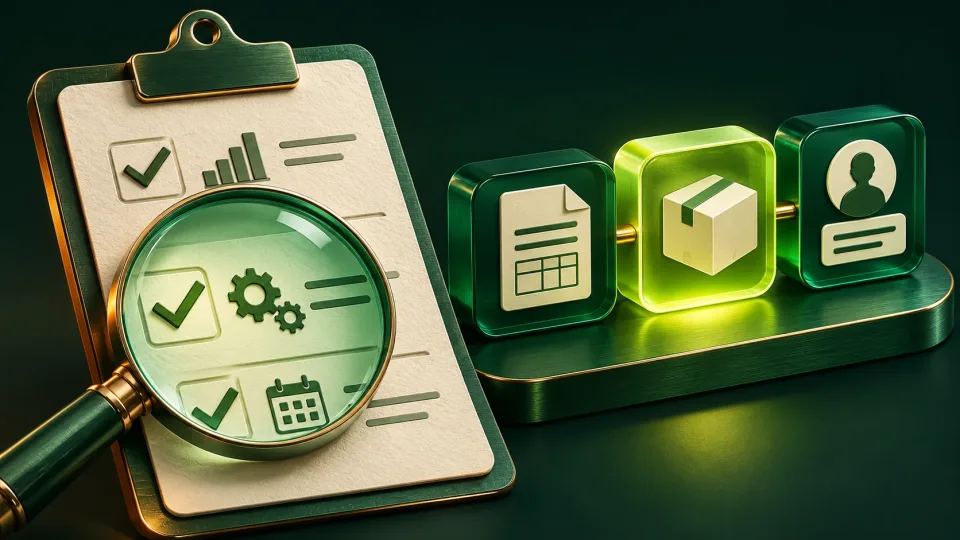
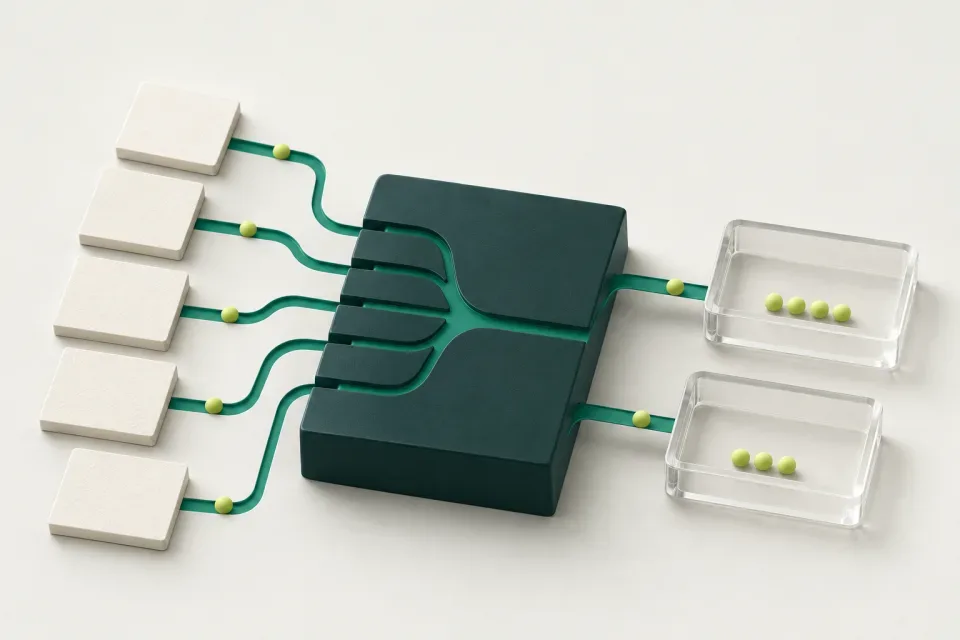
Plan one system integration with clear record ownership, field mapping, duplicate protection and visible failure handling.
4 min read
Business Systems Consulting, Implementation & Integration
Buying a system does not, on its own, fix a problem in your processes or data. We start by understanding how you work, compare the options against your requirements, then implement the chosen solution and connect it to your tools so your team actually uses it.
Mapping processes as they actually happen, identifying where work stalls, and writing down requirements and priorities.
Comparing the options on fit, cost, integration and ease of use, then giving a reasoned recommendation, which may be one of our systems or someone else’s.
Setting the system up around your processes, customising what is needed, and migrating data after cleaning and verifying it.
Connecting the system to the rest of your tools: online payments, email, meeting platforms and project management tools.
A trial on real work scenarios, then training each role on its tasks and handing over an operating guide.
You can ask for the full journey, or stop at any stage with a complete deliverable in hand.
Sessions with management and users to map processes and identify problems.
Your partYou provide examples from day-to-day work and someone who knows the details.
We turn what we heard into functions, priorities, scope and an estimated budget.
Your partYou review the list and approve the priorities.
We assess the options against your requirements and give a recommendation with its reasons.
Your partYou make the choice.
Configuration, customisation, data migration and integration with other systems.
Your partYou name someone responsible for review and approval.
A trial on real cases, changes based on the feedback, then training and launch.
Your partYour team takes part in the trial and the training.
Reviewing usage after launch and identifying the next improvements.
Your partYou share feedback from users.
Short answers to what people ask most before we start.
Request a meeting and we will answer for your own case.
Request a meetingNo. We compare solutions against your requirements. The recommendation may be one of our systems, a system from another provider, or improving the one you already have.
Yes. The analysis and requirements stage stands on its own. Its output is a document you can use with us or with any other vendor.
The number of processes and users, the volume of data to migrate, the number of systems to connect, and the extent of customisation. We define these after the first discovery session and send a proposal with clear stages.
No. Pricing is by request, because every project differs in scope. We analyse what you need and plan delivery in stages, so your budget goes first to what helps you most, and you do not pay for what you can do without.
We agree with you which data is worth migrating, what state it is in and how it will be verified. We review the size and quality of your history before deciding how much of it to migrate.
Examples of your current processes, the names of the systems you use and the number of users, your three biggest problems, and someone who can review the requirements.
The proposal sets a follow-up period in which we review usage and act on feedback. Any support or development after that is defined in a separate agreement.
Plan one system integration with clear record ownership, field mapping, duplicate protection and visible failure handling.
4 min read
Map your workflows, prioritise requirements and test business software with real scenarios before you commit.
4 min read
Your next step
Tell us how work runs today and where it stalls. Together we will work out whether the answer is a new system or adjusting what you already have.